
What We Do
Health education, prevention and screening first — treatment and referral where they are needed. Delivered right where the children already are.
A mini-hospital that drives to the school
We go where hospitals do not. Each mobile clinic is staffed by a rotating multidisciplinary team and equipped to run the full public health sequence in one stop: health education and promotion, disease prevention, screening, treatment and referral.
This is public health before it is clinical medicine. Teaching a school how not to fall ill is far cheaper than treating it afterwards. Treatment matters — it is simply not where we start.
- ✓Prevention-led — health education, promotion and sensitisation are the primary objective; testing and treatment support them.
- ✓Accessibility — reaching remote and underserved communities static clinics never reach.
- ✓Timely, affordable and patient-centred — care delivered on school grounds, aligned with the academic calendar, and reliable enough that a school can plan around it.
- ✓Continuity — structured referrals into the existing public health system for complex cases.
- ✓Community ownership — built with School Management Committees, head teachers, teachers, parents and pupil peer mentors.
The UGX 10,000 term contribution. Families who can afford it give UGX 10,000 per child per term — about $8 a year. It is reduced or waived where a family cannot pay, and no child is ever turned away.
How the contribution works
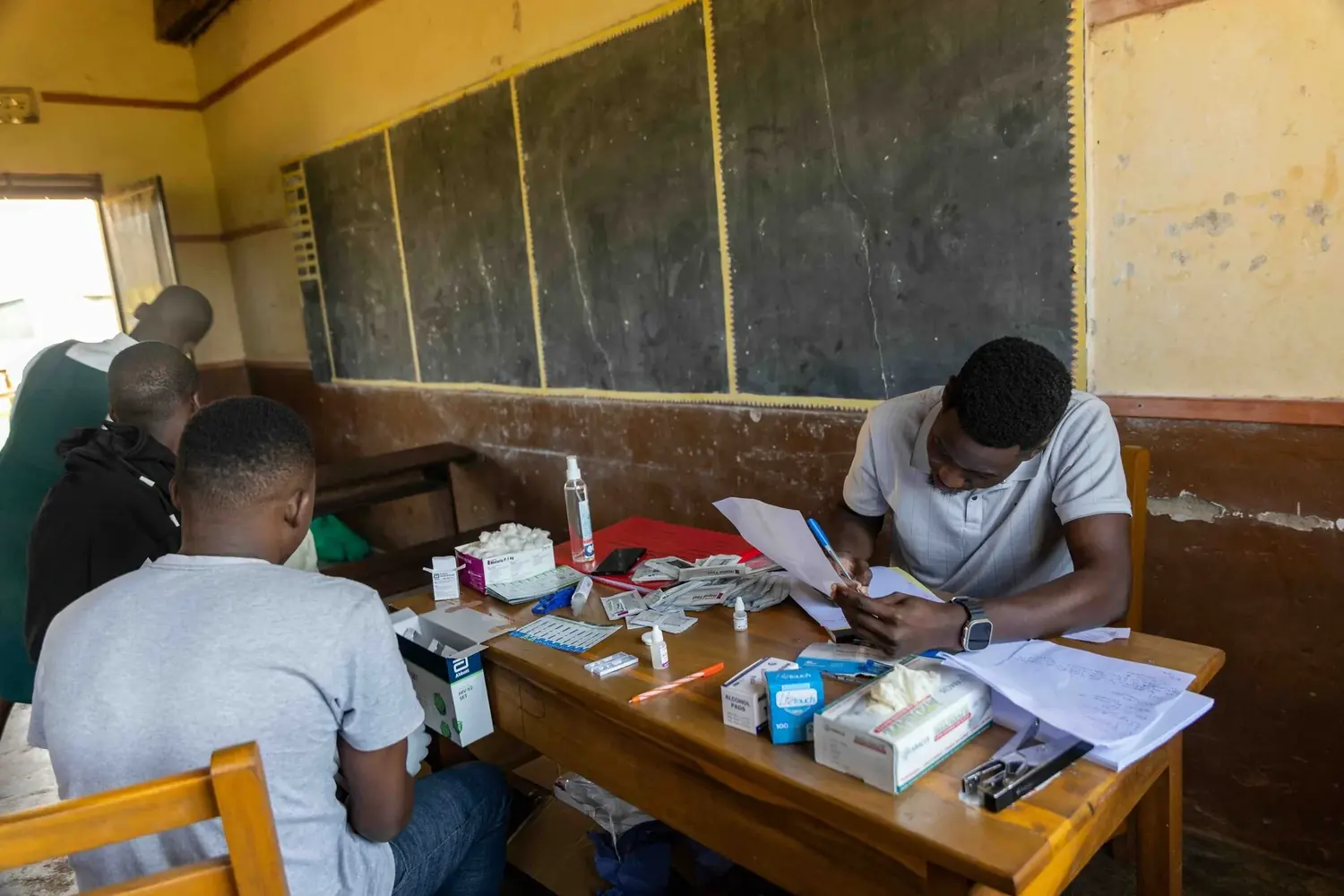
What a Healing Wheels camp delivers
Six packages, delivered in one stop, every time we come to a school — plus three programmes that run on the school’s own calendar between visits.
Today, our whole focus is one initiative
Everything we run right now serves school-going children. It is where the need is clearest, and where we can prove the model before we grow.
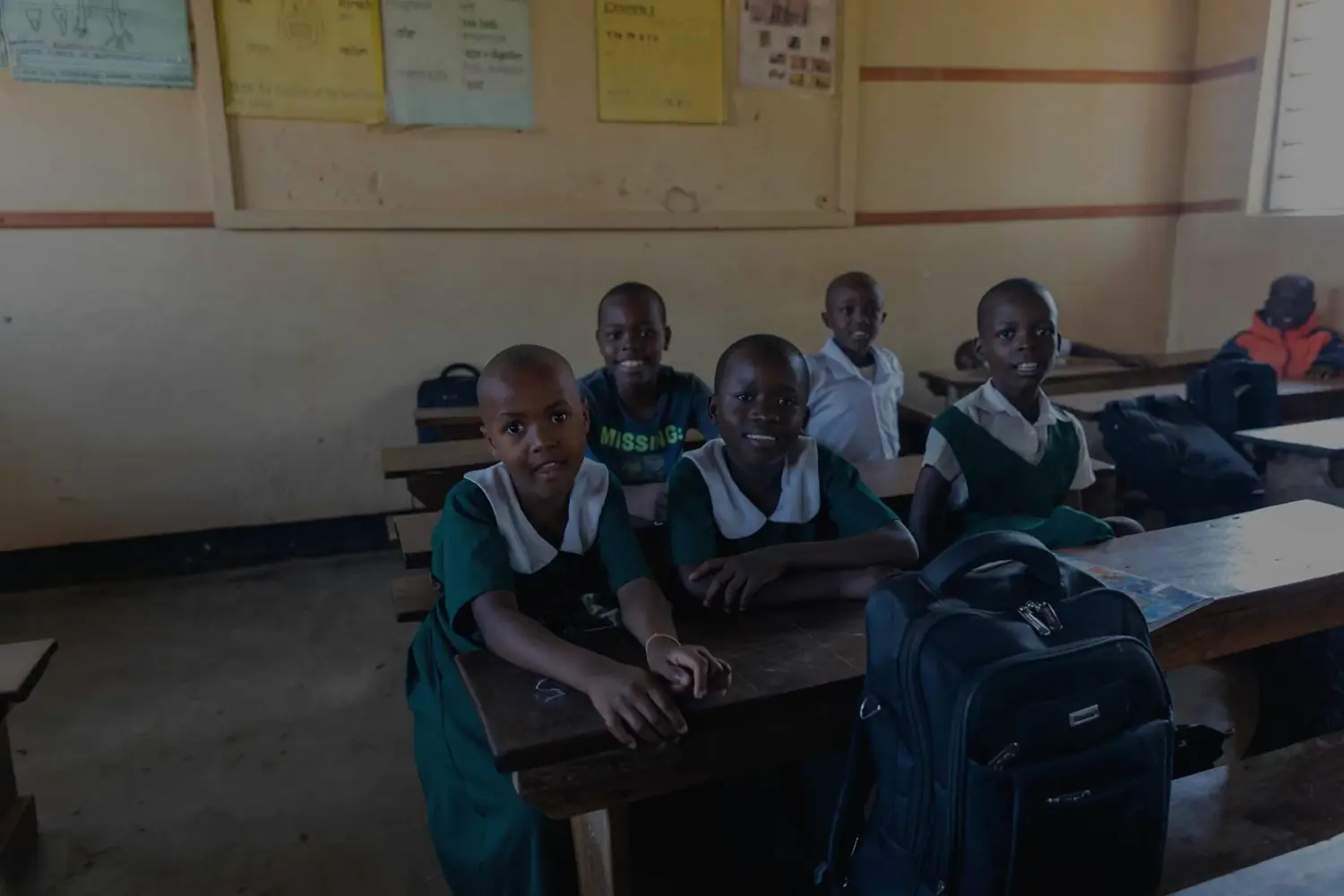
School-Going Children Initiative
Fully sponsored, multidisciplinary care delivered on school grounds — screening, treatment, health education and referral — so children stay healthy, attend class and learn. Aligned to Uganda’s academic calendar and public health strategies.
Four initiatives on our roadmap
KidCare, Mama, Single Mother and ElderCare — the same mobile-health model, extended to others the system leaves behind. Not yet running; being designed and funded.
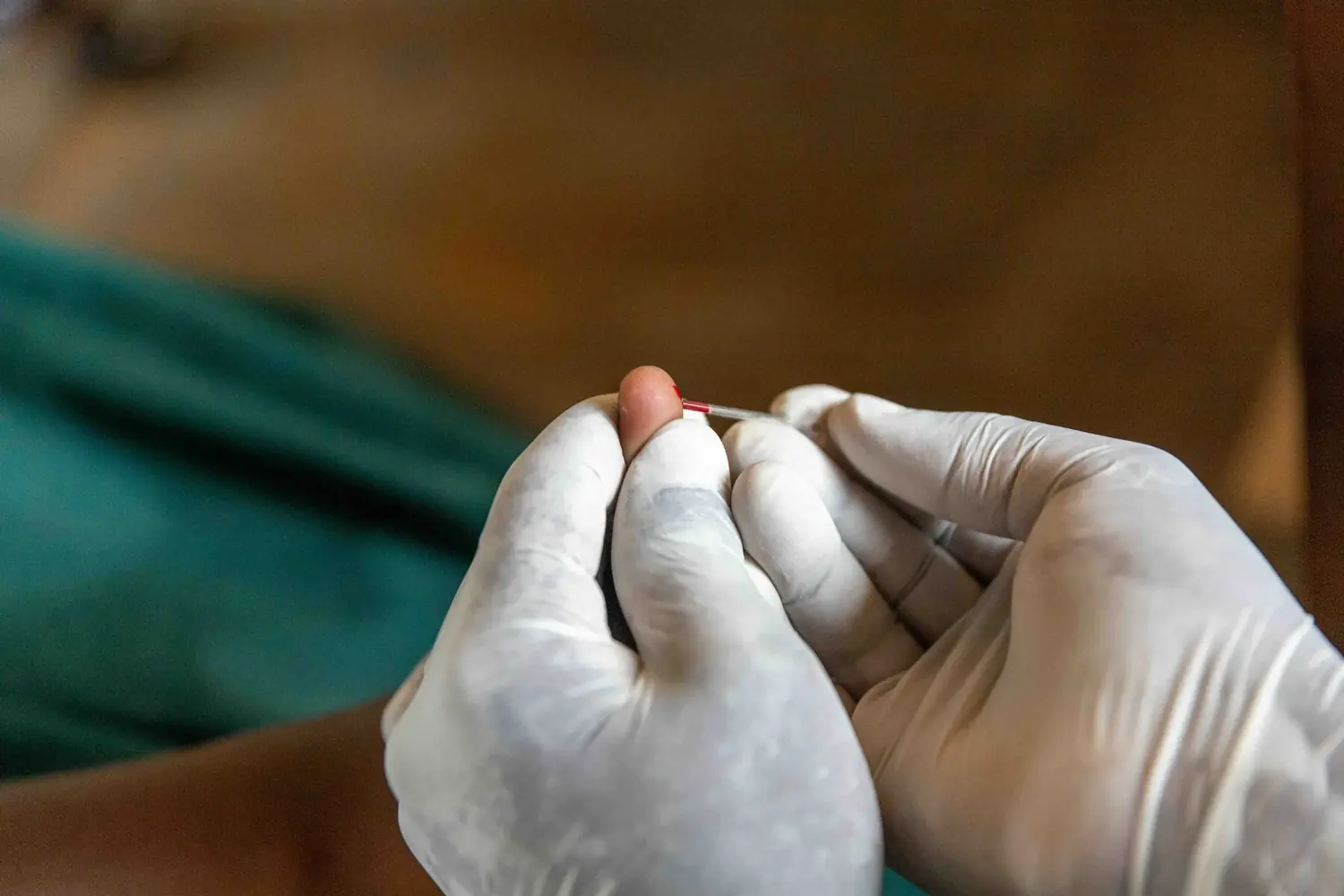
Uganda’s children are in school — but too often too sick to learn
In the Elgon sub-region, where we work, primary completion is the highest in Uganda at 93% — and Primary Leaving Examination performance is the lowest in the country at 43%. Children here are getting to school and finishing school. They are not learning.
Uganda is also one of five countries that together account for more than half of all malaria cases worldwide.
School days lost per malaria episode
Girls miss school because of menstruation
Under-fives are stunted
Public health posts unfilled nationally
Sources for these figures

This is the work — here is how to fuel it
Every screening, treatment and referral runs on people who believe a well child learns best. Be one of them.